Unlocking the power of visual learning, this guide delves into the practical application of mind maps for homeschooling. Learn how to transform learning materials into engaging, accessible, and memorable visual representations. From structuring complex subjects to tailoring approaches for diverse learning styles, this comprehensive resource provides actionable strategies to enhance homeschooling effectiveness.
This guide explores the various aspects of mind mapping in homeschooling, from foundational concepts to advanced techniques. It will walk you through the creation of effective mind maps, showing how they can be utilized in various subjects and tailored to different learning styles. Discover how to integrate mind maps into your existing curriculum and track student progress effectively.
Introduction to Mind Mapping for Homeschooling
Mind maps are visual tools that can significantly enhance the homeschooling experience. They offer a structured, engaging approach to organizing and processing information, making learning more accessible and enjoyable for both students and parents. By connecting concepts visually, mind maps facilitate active recall and deeper understanding, bridging the gap between abstract ideas and concrete examples. This method is particularly valuable in homeschooling, where individualized learning plans and diverse learning styles are often prioritized.Mind maps are powerful tools for organizing learning materials.
They transform dense, potentially overwhelming information into a readily digestible visual representation. This visual organization makes it easier to grasp complex concepts and facilitates memory retention. The interconnected nature of mind maps helps students understand the relationships between different ideas and subjects, fostering a holistic understanding of the material.
Mind Map Definition and Benefits
Mind maps are non-linear diagrams that use a central idea or theme as a starting point. Branching from this central idea are related concepts, s, images, and other visual aids. This visual structure makes complex information more manageable and memorable. In a homeschooling setting, mind maps can be incredibly beneficial for:
- Improved Comprehension: The visual representation of concepts helps students understand the relationships between different ideas, fostering a deeper understanding.
- Enhanced Organization: Mind maps allow for the organization of learning materials in a structured, visual way, making it easier to access and recall information.
- Active Recall Stimulation: The act of creating and revisiting a mind map actively engages the student’s memory and promotes recall.
- Visual Learning Enhancement: Mind maps cater to visual learners, making learning more engaging and effective.
Types of Mind Maps for Homeschooling
Different types of mind maps can be tailored to various subjects and learning styles. The most common type is the basic mind map, which uses a central idea and branching interconnected concepts.
- Basic Mind Map: This is the fundamental type, ideal for most subjects and learners. It consists of a central idea with connected branches illustrating related s.
- Timeline Mind Map: Excellent for history, science, and other subjects requiring chronological understanding. Events are arranged in a sequential manner, visually showcasing their order and relationships.
- Concept Map: Useful for showing relationships between concepts and ideas. This type highlights connections between ideas and concepts, which is particularly beneficial for subjects like science and social studies.
- Problem-Solving Mind Map: A helpful tool for tackling complex problems by breaking them down into smaller, manageable parts. This structure is helpful in subjects like math or science projects.
Mind Map Examples in Homeschooling Subjects
Mind maps can be adapted to various homeschooling subjects:
- History: A mind map for the American Revolution might have “American Revolution” as the central idea, branching out to topics like “Causes,” “Key Figures,” “Battles,” and “Consequences.”
- Science: A mind map on the water cycle could have “Water Cycle” as the central idea, with branches for evaporation, condensation, precipitation, and collection.
- Math: A mind map on fractions might include “Fractions” as the central idea, branching out to “Types of Fractions,” “Equivalent Fractions,” “Adding Fractions,” and “Subtracting Fractions.”
Facilitating Active Recall and Comprehension
Mind maps facilitate active recall by visually connecting concepts. This visual association strengthens memory and improves comprehension. Students actively engage with the material by creating the map, labeling branches, and associating images, thus promoting deeper understanding.
Comparison of Mind Maps with Other Homeschooling Tools
| Feature | Mind Maps | Flashcards | Other Learning Tools |
|---|---|---|---|
| Organization | Visual, hierarchical, and interconnected | Linear, focused on individual terms | Variable, depending on the tool |
| Comprehension | Enhances understanding of relationships | Focuses on memorization of individual facts | Various levels of comprehension depending on the tool |
| Engagement | Highly engaging, visual approach | Can be repetitive, potentially less engaging | Engagement varies depending on the tool |
| Accessibility | Easily adaptable to various learning styles | Suits learners who prefer a structured, rote approach | Accessibility varies depending on the tool |
Creating Effective Mind Maps for Homeschooling

Mind maps are a powerful tool for organizing and visualizing information, making learning more engaging and effective. They can be especially beneficial in a homeschooling environment, allowing students to connect concepts across subjects and build a deeper understanding of the material. This section will delve into the practical steps for creating effective mind maps, suitable for various homeschooling subjects.Effective mind maps go beyond simple Artikels.
They leverage visual cues, colors, and symbols to aid memory and comprehension. This structured approach can significantly enhance a student’s learning experience. A well-crafted mind map can be a valuable study tool for recalling facts and understanding relationships between ideas.
Steps in Creating a Mind Map for a Specific Subject
Creating a mind map involves a structured process. Begin by clearly defining the topic. This initial step is crucial as it sets the direction for the entire process. Next, brainstorm related ideas, using various techniques. Visualizing the connections between concepts is key.
Finally, organize the information hierarchically, placing central ideas and branches in a meaningful way.
- Defining the Topic: Start by selecting a specific topic within a subject. For example, if studying the American Revolution, the topic could be “Causes of the American Revolution.” This clear focus ensures the mind map stays focused and avoids tangents.
- Brainstorming Techniques: Employ various brainstorming techniques to generate ideas. Freewriting, listing, and questioning are just a few examples. For example, in the “Causes of the American Revolution” topic, students might brainstorm under headings like “Taxation,” “Political Grievances,” and “Economic Factors.”
- Using Visual Aids: Employ colors, images, and symbols to make the mind map engaging and memorable. For instance, use red for “taxation,” blue for “political grievances,” and green for “economic factors.” Icons or symbols representing key concepts can further enhance comprehension. A picture of the Liberty Bell might symbolize the growing discontent.
- Hierarchical Structuring: Organize the information hierarchically, starting with the central theme (e.g., “Causes of the American Revolution”) and branching out to s (e.g., “Taxation,” “Political Grievances,” and “Economic Factors”). Sub-branches can further elaborate on each .
Brainstorming Techniques for Mind Map Ideas
Brainstorming is essential for generating ideas that will form the branches of your mind map. Various techniques can help stimulate creative thought. Using these methods can lead to a more comprehensive and well-rounded mind map.
- Freewriting: Write continuously about the topic without judgment or censorship. This process can generate a wide range of ideas and connections. For the American Revolution, freewriting might lead to ideas like “stamp act,” “Boston Tea Party,” and “intolerable acts.”
- Listing: Create a list of key words or phrases related to the topic. For example, a list for the causes of the American Revolution might include “taxes,” “representation,” “British policies,” and “colonial resistance.”
- Questioning: Pose questions about the topic to stimulate further thought. For instance, “What were the major grievances of the colonists?” or “How did British policies contribute to the revolution?”
Using Colors, Images, and Symbols for Engagement
Visual elements significantly enhance a mind map’s effectiveness. Using colors, images, and symbols can make the map more engaging and aid in memorization. Color-coding related concepts, using images to represent key ideas, and incorporating symbols can make the mind map more dynamic and appealing.
- Color Coding: Assign specific colors to different categories or ideas. For example, all concepts related to taxation could be colored red, fostering visual association.
- Image Incorporation: Use images to represent key concepts or events. A picture of the Boston Tea Party might represent the resistance to taxation. Images make the mind map more visually stimulating and memorable.
- Symbol Usage: Incorporate symbols to represent different ideas or categories. A flame symbol might represent the growing revolutionary fervor.
Structuring Information Hierarchically
A well-structured mind map is crucial for understanding the relationships between ideas. This hierarchical structure organizes information in a clear and logical manner. Start with the central theme and branch out to s, then further subdivide these to connect related concepts.
- Central Theme: Place the central theme or topic at the center of the mind map. For instance, “Causes of the American Revolution” would be at the center.
- Branching Out: Branch out from the central theme to major s, such as “Taxation,” “Political Grievances,” and “Economic Factors.” These s become the primary branches.
- Subdivision: Further subdivide these primary branches to include related concepts. For example, under “Taxation,” you could have specific taxes like the Stamp Act, Sugar Act, and Townshend Acts.
Step-by-Step Guide: Creating a Mind Map for “The Water Cycle”
This guide demonstrates the process for creating a mind map on a specific topic, “The Water Cycle.”
- Central Idea: Write “The Water Cycle” in the center of a blank page.
- Major Branches: Branch out to major stages: Evaporation, Condensation, Precipitation, Collection.
- Sub-branches: Under each major stage, list specific processes. For evaporation, list sun’s heat, water turning into vapor, water rising into the atmosphere. For condensation, list water vapor cooling, water vapor forming clouds, and clouds forming.
- Visual Aids: Use a blue color for water-related concepts, an image of the sun for evaporation, and a cloud image for condensation.
- Connections: Show how each stage connects to the next through arrows or lines.
Benefits of Different Mind Map Styles
| Mind Map Style | Learning Outcome | Description |
|---|---|---|
| Chronological | Understanding sequential events | Ideal for historical timelines, scientific processes, or learning about the order of steps in a procedure. |
| Categorical | Classifying information | Useful for organizing information into categories and understanding relationships between concepts. |
| Problem-Solution | Identifying solutions to problems | Effective for analyzing issues and brainstorming possible solutions. |
Utilizing Mind Maps in Different Homeschooling Subjects

Mind maps offer a dynamic and visually engaging approach to learning, fostering deeper comprehension and knowledge retention across various subjects. By connecting concepts through branching structures, students can visualize relationships, making information more accessible and memorable. This method encourages active learning, facilitating a personalized learning experience.Mind maps can be easily adapted to diverse learning styles and provide a powerful tool for organizing information and fostering critical thinking in homeschooling environments.
Students can personalize their mind maps to reflect their unique learning preferences and build a strong foundation for understanding complex topics.
Utilizing Mind Maps to Organize Historical Events
Mind maps excel at organizing historical events by illustrating cause-and-effect relationships and chronological sequences. This visual representation allows students to grasp the interconnectedness of historical happenings, forming a comprehensive understanding of historical periods. A mind map for the American Revolution, for example, could start with the central theme “American Revolution,” branching out to key causes like taxation without representation, then to specific events like the Boston Tea Party, the Battles of Lexington and Concord, and finally to the Treaty of Paris.
Each branch could further elaborate on significant figures, dates, and outcomes.
Exploring Scientific Concepts and Processes with Mind Maps
Mind maps are exceptionally useful in science for visualizing complex scientific concepts and processes. Students can create a mind map for the water cycle, for instance, placing “Water Cycle” in the center. Branches could radiate outward to evaporation, condensation, precipitation, and collection, with further branches detailing the specific processes within each stage, such as solar radiation driving evaporation or cloud formation during condensation.
Illustrative examples of chemical reactions or the stages of photosynthesis can be equally well represented.
Understanding Mathematical Formulas and Relationships with Mind Maps
Mind maps provide a visual representation of mathematical formulas and relationships. Students can create a mind map to explore the quadratic formula, placing the formula itself at the center. Branches can then detail the variables within the formula (a, b, c), and sub-branches can represent different applications of the formula. A mind map for trigonometric functions can display the core functions (sine, cosine, tangent) with their respective graphs, relationships, and identities.
Students can effectively visualize the interconnections between different formulas. For instance, a mind map for the Pythagorean Theorem could have the theorem statement at the center, with branches expanding to the variables (a, b, c), their relationships, and examples.
Applying Mind Maps to Language Arts, Including Grammar and Literature
Mind maps are invaluable tools for understanding grammar and literature. For grammar, a mind map on sentence structure could have “Sentence Structure” at the center, with branches leading to different types of sentences (simple, compound, complex), followed by detailed explanations of clauses and phrases. In literature, a mind map for a novel could organize characters, plot points, themes, and symbols.
For instance, a mind map for Shakespeare’s Hamlet could illustrate the central theme of revenge, with branches detailing specific instances of revenge in the play, related characters, and the play’s setting.
Incorporating Mind Maps into Projects and Assignments
Mind maps can significantly improve project and assignment organization. Students can create a mind map for a research paper outlining the introduction, body paragraphs, and conclusion, with further branches for specific supporting evidence and arguments. For a creative writing project, a mind map can structure plot points, characters, setting, and conflicts. The mind map can visually guide the entire process, helping students maintain focus and effectively organize their thoughts.
Creative Mind Map Layouts for Different Subjects, Including Creative Writing
Creative mind map layouts can enhance the learning experience in diverse subjects. For creative writing, a mind map for a short story can organize the setting, characters, plot points, and climax in a visually engaging manner. In history, a mind map could use different colors to represent different eras or regions, highlighting significant events and figures within those periods.
A mind map for a science experiment could display the hypothesis, procedure, materials, results, and conclusion, enabling students to visualize the entire process. A science mind map can use different shapes and colors to represent different variables and their relationships, thereby providing a clear visual representation of the experimental process.
Integrating Mind Maps into the Homeschooling Curriculum

Integrating mind maps into a homeschooling curriculum offers a dynamic and engaging approach to learning. This method fosters deeper understanding and promotes critical thinking skills, enhancing the overall learning experience. By visually connecting ideas, students can grasp complex concepts more effectively and retain information more readily. This approach also empowers students to take ownership of their learning process.Mind maps can be seamlessly integrated into various aspects of a weekly or monthly homeschooling schedule, complementing existing learning activities and enhancing the effectiveness of traditional lessons.
This integration can take many forms, from using mind maps as pre-reading tools to serving as frameworks for reviewing learned material. This adaptable approach allows homeschooling parents to tailor the use of mind maps to suit the specific needs and learning styles of their children.
Framework for Weekly/Monthly Integration
A well-structured framework for integrating mind maps into a weekly or monthly homeschooling schedule is essential for maximizing their effectiveness. This framework should align with the overall curriculum goals and provide a flexible structure that can be adapted as needed. A suggested approach involves incorporating mind maps as a pre-reading tool, a post-learning review tool, or a way to connect different subjects.
This allows for a more comprehensive and interconnected learning experience.
- Weekly Schedule Integration: Allocate specific time slots for creating mind maps, perhaps 15-30 minutes, depending on the subject and the child’s age. This structured approach allows for consistent practice and reinforces the use of this tool. For example, dedicate Monday for creating mind maps related to history and Wednesday for science. This structure helps establish a routine and makes mind mapping a regular part of the learning process.
- Monthly Curriculum Integration: Use mind maps as a summary tool at the end of a unit of study. This allows students to synthesize the key concepts learned during the month. For example, at the end of a month-long study of the American Revolution, students could create a mind map connecting key figures, events, and outcomes. This encourages reflection and helps solidify understanding.
Incorporating Mind Maps into Learning Activities
Mind maps can be integrated into a variety of learning activities, enhancing their effectiveness. This approach fosters active learning and allows for a more personalized approach to education. For example, mind maps can be used as a pre-reading tool, helping students visualize the main topics before delving into a new text.
- Pre-reading Activities: Before reading a chapter, create a mind map outlining the potential topics that might be covered. This helps students anticipate what they’re about to learn, fostering a sense of anticipation and engagement. This helps students to predict what the chapter will be about, making reading more focused and effective.
- Post-learning Review: After completing a lesson, create a mind map summarizing the key concepts, terms, and relationships. This active review method helps solidify understanding and facilitates recall. Students can use colors and images to make their mind maps visually engaging and memorable.
- Cross-curricular Connections: Utilize mind maps to connect concepts across different subjects. For example, a mind map on the Roman Empire could connect historical events with geographical locations and social structures. This interdisciplinary approach encourages deeper understanding and fosters critical thinking skills.
Strategies for Incorporating Mind Maps into Lesson Plans
Mind maps can be incorporated into existing homeschooling lesson plans in a variety of ways, adding value to existing educational content. This allows for a more comprehensive and well-rounded learning experience for the student.
- Pre-lesson Mind Maps: Begin a lesson with a mind map related to the topic, stimulating prior knowledge and setting the stage for new learning. This will help activate existing knowledge and establish connections with new information.
- Post-lesson Synthesis: Use mind maps to summarize key ideas and concepts after a lesson, reinforcing learning and promoting comprehension. This method allows for review and deeper understanding.
- Project-based Learning: Employ mind maps as a framework for organizing research and presenting project findings. This visually represents complex information and encourages students to think critically.
Tracking Student Progress
Mind maps provide a visual record of student understanding and progress. This visual representation makes it easier to track progress and identify areas where students might need additional support.
- Visual Representation of Progress: Mind maps provide a clear visual representation of the student’s understanding, making it easy to track progress over time. Comparing mind maps created at different stages of learning reveals the development of knowledge and comprehension.
- Identifying Learning Gaps: By comparing mind maps, educators can identify areas where students might be struggling or where their understanding is incomplete. This allows for targeted interventions and support to address specific learning needs.
Evaluating Student Understanding
Evaluating student understanding through mind maps involves assessing both the content and the structure of the map. This method provides a holistic evaluation of their comprehension.
- Content Accuracy: Assess the accuracy and completeness of the information presented in the mind map. Does it accurately reflect the key concepts and details of the topic? This method allows for a detailed assessment of the student’s grasp of the material.
- Logical Connections: Evaluate the logical connections between different ideas and concepts within the mind map. Are the relationships clear and well-defined? This aspect ensures that the student understands the connections between the different elements of the topic.
Table of Mind Map Integration Examples
| Homeschooling Subject | Mind Map Activity | Example |
|---|---|---|
| History | Connecting historical events with timelines | Creating a mind map showing the causes and effects of the American Revolution. |
| Science | Illustrating scientific concepts | Creating a mind map outlining the parts of a plant and their functions. |
| Mathematics | Visualizing mathematical formulas | Creating a mind map showing the relationships between different geometric shapes. |
| Language Arts | Analyzing literary devices | Creating a mind map to identify the different literary devices used in a poem. |
Mind Map Templates and Tools
Mind maps offer a flexible and visual approach to learning and organizing information. Choosing the right template and tool can significantly enhance the effectiveness of this method for homeschooling. This section will explore various options, from pre-designed templates to digital software, to help homeschoolers tailor mind maps to their specific needs.Effective mind mapping hinges on selecting appropriate templates and tools.
This section will cover a range of options, from readily available templates to sophisticated software, enabling a personalized approach to learning.
Mind Map Templates for Different Subjects
Mind map templates can be tailored to specific subjects, facilitating the organization of diverse information. Using subject-specific templates can make the process of note-taking and knowledge organization more efficient.
- Mathematics: A template for mathematics might include branches for different operations (addition, subtraction, multiplication, division) or concepts (geometry, algebra, calculus), allowing students to visualize relationships between these areas. Sub-branches can further elaborate on formulas, theorems, and examples within each topic.
- History: A chronological template, organized by eras or key events, can help students understand historical timelines and cause-and-effect relationships. Key figures, events, and their significance can be represented within the map’s structure.
- Science: A template for scientific concepts might have branches for different scientific disciplines (biology, chemistry, physics) with further subdivisions for specific topics like the water cycle, the periodic table, or the solar system. Visual elements, such as diagrams or images, can enhance understanding.
- Language Arts: A template for language arts might include branches for grammar, vocabulary, reading comprehension, and writing. Examples of different sentence structures, literary devices, and writing styles can be included to visually represent their relationships.
Digital Mind Mapping Tools and Software
Digital mind mapping tools provide enhanced features and flexibility compared to traditional paper-based methods. They offer features for collaboration, sharing, and customization, making them highly beneficial for homeschooling.
- MindManager: A comprehensive software suite offering advanced features like linking, color-coding, and collaboration. It allows users to create complex mind maps and integrates with other productivity tools.
- XMind: A user-friendly tool with a clean interface. It supports various export options and allows users to create complex mind maps, organize ideas visually, and manage projects effectively.
- FreeMind: A free and open-source software option with a straightforward design. It provides basic functionality for creating and organizing mind maps, ideal for users who need a simple and cost-effective solution.
- Mindomo: A web-based mind mapping tool, suitable for collaborative projects. It offers intuitive features for creating, editing, and sharing mind maps. Its cloud-based nature enables seamless access from various devices.
Freehand Drawing and Visual Aids
Integrating freehand drawing and visual aids into mind maps can further enhance understanding and retention. Visual representations can make abstract concepts more tangible and memorable.
- Diagrams and Charts: Incorporating diagrams and charts within mind maps provides a visual representation of relationships and data, making the information more accessible and memorable.
- Illustrations and Images: Using relevant images can bring abstract concepts to life, making the mind map more engaging and memorable. Visual representations can significantly improve comprehension and retention.
- Color-Coding: Color-coding different branches and sub-branches can help distinguish and group related ideas effectively, making the mind map visually appealing and easy to navigate. Different colors can represent distinct categories, enhancing organization and understanding.
Online Mind Map Generators
Online mind map generators provide a user-friendly alternative to software, allowing users to create and edit mind maps without downloading or installing any software. These tools offer a practical solution for quick mind mapping.
- Bubbl.us: A popular web-based mind mapping tool offering a simple interface and useful features for brainstorming and organizing ideas. Its straightforward design makes it easy for users to create and edit mind maps without technical difficulties.
- Mind42: A web-based mind map generator that allows users to create mind maps, add images, and organize ideas effectively. Its intuitive interface makes it easy for users to create visually appealing mind maps and enhance their learning experience.
Comparison Table of Mind Mapping Software
The following table provides a comparative overview of various mind mapping software.
| Software | Features | Pros | Cons |
|---|---|---|---|
| MindManager | Advanced linking, color-coding, collaboration | Comprehensive features, project management integration | Can be expensive, steep learning curve |
| XMind | User-friendly interface, various export options | Intuitive, versatile, good for various needs | Limited collaborative features compared to some options |
| FreeMind | Free, open-source, basic functionality | Cost-effective, suitable for basic needs | Limited features compared to paid options |
| Mindomo | Web-based, collaborative | Accessible from any device, ideal for teamwork | Functionality might be limited for complex projects |
Addressing Different Learning Styles with Mind Maps
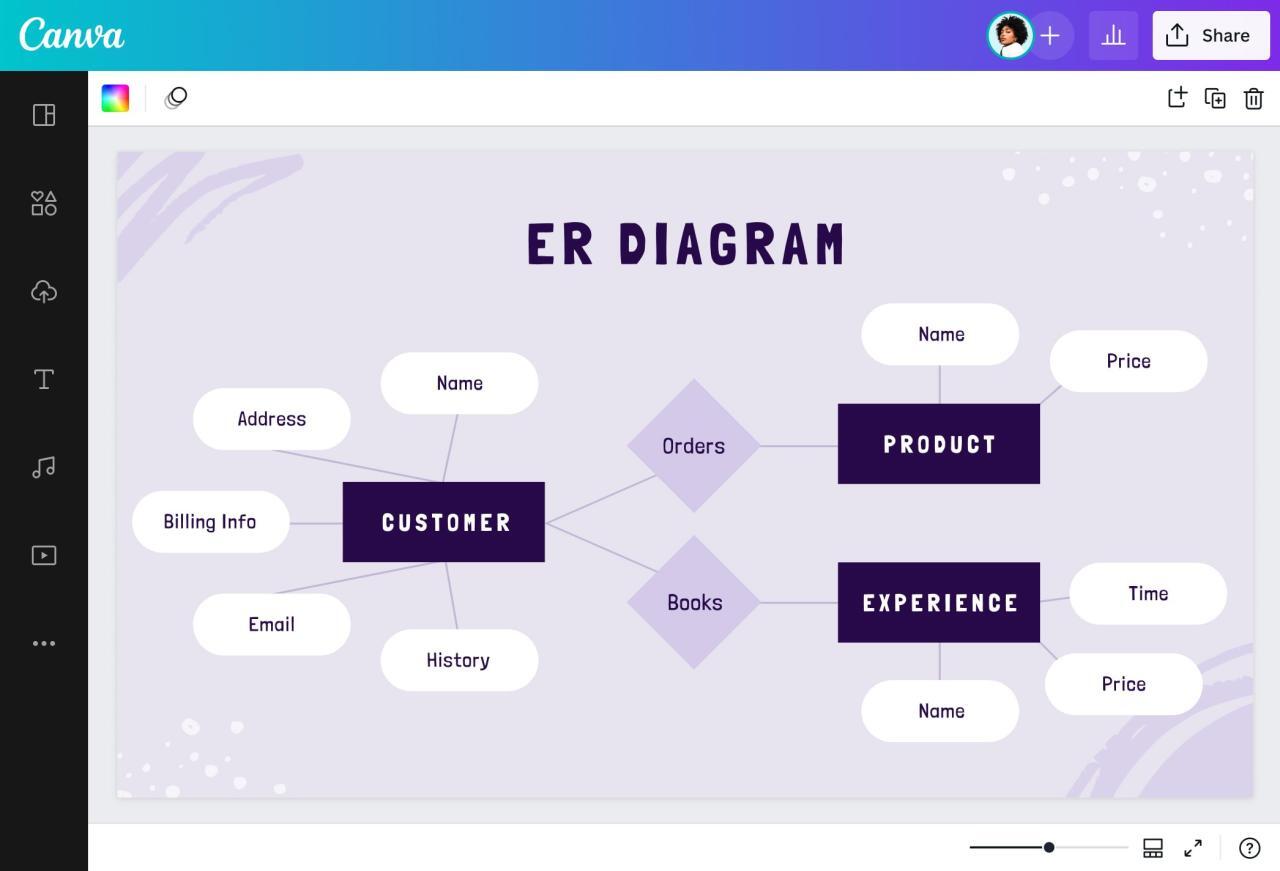
Mind maps, with their visual and hierarchical structure, can be highly effective tools for homeschooling students. However, their effectiveness is enhanced when adapted to suit individual learning preferences and needs. Recognizing diverse learning styles and adjusting mind map techniques accordingly ensures engagement and optimal learning outcomes for all students.Mind maps are inherently visual, but they can be tailored to accommodate auditory and kinesthetic learners.
This adaptability allows for a more inclusive and engaging learning experience, maximizing the potential of this powerful tool for diverse learners.
Adapting Mind Map Structures for Visual Learners
Visual learners thrive on visual representations. Mind maps, naturally, are ideal for this learning style. Encourage students to use vibrant colors, different font styles, and attractive images to create visually appealing mind maps. Encourage the use of color-coding for different categories and sub-categories to enhance visual clarity. Using visual aids like diagrams, charts, and illustrations within the mind map further strengthens understanding.
Adapting Mind Map Structures for Auditory Learners
Auditory learners often benefit from verbalization and discussions. Encourage these learners to verbally explain the connections between concepts while constructing their mind maps. They can record themselves summarizing their thoughts and relationships. Audio recordings of key terms and definitions can also be integrated into the mind map. Collaborating with other students in small groups can foster auditory learning through discussion and verbal explanation of the connections.
Adapting Mind Map Structures for Kinesthetic Learners
Kinesthetic learners often learn best through hands-on activities. Encourage these learners to physically manipulate and arrange the branches of the mind map, moving them around to visualize relationships. Include tactile elements like sticky notes or textured materials to enhance engagement. Encourage the use of interactive mind map software that allows for dynamic manipulation of nodes and connections.
This physical interaction fosters a deeper understanding of the concepts.
Tailoring Mind Maps for Students with Specific Learning Needs
Students with specific learning needs may require further modifications to the mind map structure. For students with dyslexia, consider using simpler font styles, larger spacing between branches, and a clear, organized layout. For students with ADHD, shorter, more focused mind maps with fewer branches may be beneficial. Breaking down complex topics into smaller, manageable chunks with color-coding and visual cues can be highly effective.
Providing a structured template with clearly defined sections and guidelines can help these students focus and organize their thoughts.
Engaging Multiple Senses While Using Mind Maps
Mind maps can be enhanced by engaging multiple senses. Visual learners can benefit from using colored markers and highlighters. Auditory learners can discuss their ideas with others. Kinesthetic learners can use different textures and tactile elements. Combining these approaches creates a multi-sensory learning experience.
Creating Mind Maps That Accommodate Varying Levels of Cognitive Function
Mind maps can be adjusted to suit different cognitive functions. For students with lower cognitive function, using a more structured template with simpler concepts and clear categories can be very helpful. Breaking down complex topics into smaller, more manageable parts will improve understanding. Providing visual aids and concrete examples will strengthen understanding. For students with higher cognitive function, encouraging them to create more complex mind maps with multiple connections and abstract concepts is encouraged.
Table Illustrating Tailoring Mind Map Activities to Different Learning Preferences
| Learning Style | Mind Map Adaptation Strategies | Examples |
|---|---|---|
| Visual | Use bright colors, varied fonts, images, diagrams, charts. | Color-coding branches, using icons, incorporating images related to concepts. |
| Auditory | Encourage verbal explanation of connections, audio recordings of summaries, group discussions. | Verbalizing relationships, recording summaries, collaborating in groups. |
| Kinesthetic | Encourage physical manipulation of branches, tactile elements (sticky notes, textured materials), interactive software. | Rearranging branches, using different textures, interactive mind map tools. |
| Specific Learning Needs (e.g., Dyslexia, ADHD) | Simpler font styles, larger spacing, clear layout, shorter maps, structured templates, visual cues. | Larger font sizes, simplified diagrams, clear visual markers for ADHD. |
Epilogue

In conclusion, this comprehensive guide has explored the powerful potential of mind maps as a dynamic and versatile tool for homeschooling. By utilizing the techniques presented, you can create a richer, more engaging, and personalized learning experience for your students. This approach fosters active recall, improves comprehension, and encourages critical thinking. Mind maps provide a flexible framework that adapts to various subjects, learning styles, and curriculum designs.
Ultimately, they empower both students and educators to transform learning into a vibrant and enriching journey.