Unlock the power of visual learning with mind mapping techniques. This guide provides a comprehensive approach to taking better notes, exploring the core principles, essential tools, and advanced strategies. From simple lecture notes to complex research projects, mind mapping offers a structured and engaging method for capturing and organizing information.
Discover how mind maps transform the note-taking process, enhancing understanding and retention. Learn practical techniques for applying mind mapping to various situations, from meetings and brainstorming sessions to exam preparation. This guide will equip you with the skills needed to effectively utilize mind mapping for improved efficiency and organization.
Introduction to Mind Mapping for Note-Taking
Mind mapping is a powerful visual technique for organizing and remembering information. It’s more than just drawing a diagram; it’s a structured way to connect ideas and concepts, making notes more engaging and easily recalled. This method is particularly beneficial for absorbing and retaining complex information, such as lecture material or research findings.By visually representing ideas and their relationships, mind mapping transforms the often-linear process of note-taking into a dynamic and interconnected network.
This approach fosters a deeper understanding of the subject matter and improves the overall learning experience.
Core Principles of Mind Mapping
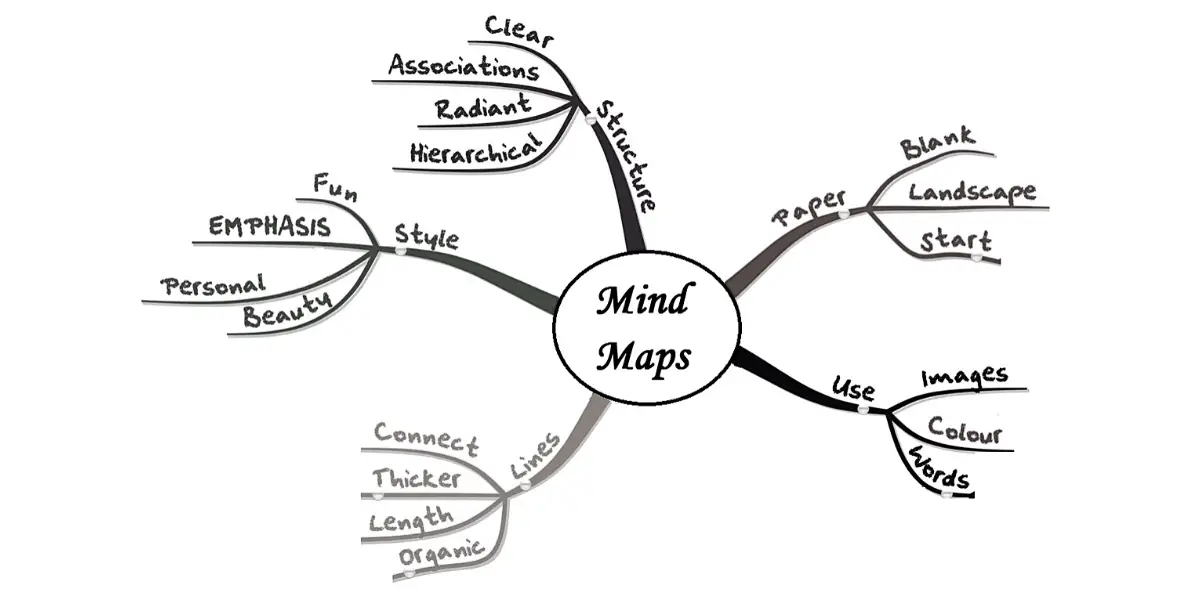
Mind mapping relies on a few key principles to create a comprehensive and easily navigable visual representation of information. Central to this method is the use of a central idea or topic, often represented by a or phrase. From this central theme, branches radiate outwards, each representing a major concept or . Subsequent branches further detail these concepts, creating a hierarchical structure that mirrors the relationships between ideas.
This hierarchical structure, along with the use of s and images, significantly improves the organization and accessibility of information.
Mind Map Structure Example
A basic mind map structure typically begins with a central concept. Imagine the central topic is “Sustainable Agriculture.” From this core concept, branches could emerge representing “Soil Health,” “Water Conservation,” and “Crop Diversity.” Each of these main branches could then have further branches detailing specific strategies within each category. For instance, under “Soil Health,” branches might include “Composting,” “Crop Rotation,” and “No-Till Farming.” This hierarchical structure allows for a detailed and interconnected understanding of the central theme.
Benefits of Using Mind Maps for Note-Taking
Mind maps offer several advantages over traditional linear note-taking methods. Their visual nature promotes comprehension and retention. The interconnected structure of a mind map facilitates the identification of relationships between ideas, leading to a more holistic understanding of the subject matter. The use of s and images further enhances memory and recall. This visual approach is particularly beneficial for complex topics, as it simplifies the information into a more manageable and understandable format.
Mind Map Layout for a Hypothetical Lecture Topic
To illustrate a mind map layout, let’s consider a lecture on “The History of the Automobile.” The central theme would be “History of the Automobile.” From this central idea, branches could emerge for key periods like “Early Development,” “Mass Production Era,” and “Modern Innovations.” Each period would have further branches detailing significant events, inventions, and influential figures.
Visual aids, like images of early cars or diagrams of engine components, could be incorporated to further enhance understanding and memory.
Comparison of Linear Note-Taking and Mind Mapping
| Feature | Linear Note-Taking | Mind Mapping ||——————-|—————————————————————————————–|—————————————————————————————————|| Structure | Sequential, often text-based, with limited visual representation.
| Hierarchical, visual, with interconnected branches representing relationships between ideas. || Organization | Can become cluttered and difficult to navigate, especially for complex topics. | Organizes information visually, making it easily navigable and facilitating understanding of connections.
|| Memory Retention| Requires active recall and memorization strategies. | Visual representation enhances memory and recall, as the interconnected nature of ideas aids comprehension.
|| Information Recall | Information retrieval can be challenging as the focus is on chronological order. | Easily locate specific information through the hierarchical structure, leading to quick and efficient recall. || Creativity & Understanding | Less conducive to creative thinking and exploring connections between ideas. | Encourages creative thinking by connecting concepts and exploring various perspectives.
|
Essential Tools and Techniques
Effective note-taking with mind maps relies heavily on the right tools and techniques. Choosing the right software and understanding how to utilize its features, along with mastering the visual elements, significantly impacts the clarity and efficiency of your mind maps. This section will explore various mind mapping software options, key features, visual elements, and their effective application.
Mind Mapping Software Options
A plethora of mind mapping software is available, catering to different needs and preferences. Free online tools offer accessibility and ease of use, while desktop applications provide greater customization options and potentially enhanced features. Choosing the right software depends on factors such as frequency of use, desired level of customization, and technical expertise.
- Free Online Tools: Many user-friendly mind mapping tools are available for free online. These platforms often require no downloads or installations, allowing users to access them from any device with an internet connection. They are excellent for occasional users or those who prefer a quick and easy way to create mind maps without the need for dedicated software.
Examples include MindMeister, FreeMind, and XMind.
- Desktop Applications: Desktop mind mapping software provides a more robust environment for creating detailed and complex mind maps. These programs often offer a wider range of features, including advanced formatting options, customizable templates, and potentially larger storage capacity. Software such as MindManager and iMindMap are examples of desktop mind mapping applications that cater to users seeking comprehensive features and greater control over their mind maps.
Key Features of Effective Mind Mapping Software
Selecting mind mapping software with appropriate features is crucial. These features enhance the clarity, organization, and presentation of your mind maps.
- Branching and Connecting: The software should facilitate the creation of clear and logical branches and connections between ideas. This allows for easy navigation and understanding of the relationships between concepts.
- Customization Options: Software should provide a range of customization options for colors, fonts, images, and shapes. This flexibility lets users tailor their mind maps to reflect their unique style and preferences.
- Import/Export Capabilities: The ability to import and export mind maps in various formats (e.g., PDF, JPEG, PNG) is essential for sharing and collaborating on projects. Import/export features enhance the potential for seamless integration with other applications.
Mind Map Symbols and Their Meanings
Using specific symbols within a mind map can effectively communicate relationships between ideas. Different symbols often represent various concepts or ideas, which adds clarity to the mind map.
- Arrows: Arrows visually represent the connections between ideas, highlighting relationships such as cause and effect or sequence. They help direct the reader’s attention through the map.
- Boxes and Shapes: Boxes and shapes can visually group related ideas. The shape itself may indicate the nature of the grouping (e.g., a square for tasks, a circle for concepts).
Using Colors and Images Effectively
Color and images can significantly enhance the visual appeal and understanding of mind maps. Strategic use of color and images creates a visually stimulating and informative representation of ideas.
- Color Coding: Employing colors to categorize related ideas creates visual cues. This helps to group similar concepts and highlight connections more effectively. For instance, a specific color can represent a particular project phase or category.
- Visual Imagery: Using relevant images can improve comprehension and memory retention. Images associated with concepts provide a visual representation that enhances recall. This visual element can significantly aid understanding and make the mind map more engaging.
Using Font Sizes and Styles for Emphasis
Varying font sizes and styles within a mind map can highlight important concepts or details. This approach helps to draw attention to specific information and improve readability.
- Font Size Variation: Employing larger font sizes for key concepts emphasizes their importance. This approach allows users to easily identify and prioritize essential details.
- Font Style Variation: Different font styles (e.g., bold, italics) can further enhance emphasis and create visual distinctions. This helps the reader understand the hierarchy of ideas and the importance of each concept within the mind map.
Applying Mind Mapping Techniques
Mind mapping transcends simple note-taking; it’s a dynamic method for organizing and processing information. By visually representing connections between ideas, mind maps foster deeper understanding and recall. This section explores practical applications of mind mapping in various contexts, from capturing meeting insights to brainstorming new project concepts.Applying mind mapping techniques effectively involves understanding how to translate diverse information into a visual format.
This process is crucial for both personal learning and collaborative efforts, allowing individuals to synthesize complex concepts and identify key relationships within them. This section will demonstrate how to adapt mind mapping for specific situations and incorporate visual elements for enhanced comprehension.
Meeting Note-Taking
Effective note-taking during meetings is vital for capturing key decisions and action items. A mind map can structure these notes, making them more accessible and actionable. The following example illustrates how to capture meeting information using a mind map. 
The central concept of the meeting, for instance, could be “Project Alpha Launch”. Branching off this central theme would be s such as “Marketing Strategy”, “Timeline”, “Budget Allocation”, and “Team Roles”. Each would have further branches for specific details, like “Target Audience” under “Marketing Strategy” or “Milestones” under “Timeline”. This hierarchical structure allows for easy identification of key points and their relationships.
Visual aids such as icons or colored markers can help distinguish different sections and prioritize critical elements.
Exam Preparation
Mind maps are powerful tools for exam preparation, aiding in organizing vast amounts of information and reinforcing learning. This method transforms complex material into a more digestible and engaging format, which enhances memory retention.
For example, if studying for a history exam, the central theme might be “The American Revolution”. Branches could include “Causes”, “Key Figures”, “Battles”, and “Outcomes”. Each branch can then be further subdivided with specific details. Visual cues, such as images or symbols, can be integrated to represent key events or figures. Color-coding different aspects of the topic (e.g., causes in one color, battles in another) can enhance comprehension and recall.
Brainstorming a New Project
Mind mapping is an effective technique for brainstorming new projects. It fosters creative thinking by enabling users to explore various ideas and connections. The following example demonstrates the application of mind mapping for brainstorming.
A central theme could be “New Mobile Application”. Branches could explore “Target Audience”, “Features”, “Competitive Analysis”, “Marketing Strategies”, and “Technology”. Each branch can be further subdivided with detailed ideas. For instance, “Features” might include “User-Friendly Interface”, “Push Notifications”, “Social Media Integration”. This allows exploration of various facets of the project and fosters connections between seemingly disparate ideas.
Visuals in Mind Maps
Incorporating visuals enhances the clarity and memorability of mind maps. Images, diagrams, and symbols provide concrete representations of abstract concepts. Color-coding is another valuable visual technique. Each branch or sub-branch can be assigned a distinct color to distinguish categories and aid in recalling information.
Adding Details to Mind Maps
Multiple methods can be employed to add details to a mind map. Using bullet points or short phrases is suitable for quick notes. Adding detailed sentences is more suitable for explaining concepts or events. Using key words and phrases is suitable for focusing on the core aspects of the subject.
Enhancing Note-Taking Efficiency
Mastering mind mapping extends beyond the initial creation of the visual structure. Efficient note-taking involves strategic connections between ideas, effective use of branches, concise summarization, rapid concept capture, and insightful review and revision. By applying these techniques, mind maps transform from simple diagrams into powerful tools for knowledge retention and application.
Connecting Ideas within a Mind Map
A well-connected mind map facilitates understanding and recall. Interlinking ideas through branches and s establishes relationships, showing how concepts build upon each other. This interconnection is crucial for grasping the broader context and identifying patterns. For instance, if you are studying the history of the Roman Empire, connecting “political structures” to “economic systems” and “social classes” reveals a comprehensive understanding of the interconnectedness of those elements.
Using Branches and Sub-Branches Effectively
Effective use of branches and sub-branches is paramount for a well-organized mind map. Primary branches represent main topics, and sub-branches detail supporting ideas. This hierarchical structure mirrors the natural flow of thought, allowing for a clear representation of the relationships between ideas. For example, a branch titled “Causes of the American Revolution” might have sub-branches such as “Taxation policies,” “Political representation,” and “Philosophical influences.” Further sub-branches can elaborate on each of these points, providing greater detail and clarity.
Summarizing Information in a Mind Map
Concise summarization within a mind map is essential for efficient note-taking. Instead of verbatim transcription, capture key concepts and supporting details in concise phrases and s. Using abbreviations and symbols can further enhance summarization. For example, instead of writing out a lengthy definition of “Renaissance humanism,” use a shorthand like “Renaissance emphasis on human potential.” This method promotes active recall and reduces the need for extensive rewriting.
Capturing Key Concepts Quickly
Developing techniques for rapid concept capture is crucial for efficient note-taking. Employing s, abbreviations, and symbols allows for rapid recording of information. Using visual cues, like icons or color-coding, enhances memorability and recognition. For instance, if you are taking notes on a scientific concept, you might use a color-coded system to differentiate between different variables and constants.
Reviewing and Revising Mind Maps
Regular review and revision of mind maps are critical for solidifying understanding and retention. After each session, review your mind map to identify gaps in your knowledge or areas needing further exploration. Revising mind maps helps you refine connections between ideas and ensure a more comprehensive understanding of the material. For example, reviewing a mind map on the periodic table of elements can highlight areas where further research is needed.
Revising allows for integration of new information and a more refined representation of the subject matter.
Overcoming Challenges and Common Mistakes
Mind mapping, while a powerful note-taking technique, can present certain challenges for beginners. Understanding potential pitfalls and developing strategies to overcome them is crucial for maximizing the effectiveness of this method. This section addresses common mistakes, implementation difficulties, and organizational solutions, offering practical advice for successful mind mapping.Implementing mind maps effectively requires a mindful approach to overcome potential obstacles.
It’s important to recognize that not every individual will find mind mapping instantly intuitive, and persistence and refinement are key to mastering this tool. This section details how to address common challenges and transform potential hurdles into stepping stones towards successful note-taking.
Common Mistakes in Mind Mapping
Mind mapping, like any other method, has its common pitfalls. Avoiding these mistakes will significantly enhance the value of your mind maps. A lack of clear structure or a failure to use the visual aspects effectively can lead to confusion and decreased effectiveness.
- Insufficient Brainstorming: Rushing the initial brainstorming phase can result in incomplete or fragmented mind maps. Thoroughly exploring ideas and connections before organizing them visually is crucial for comprehensive note-taking. Ensure all relevant concepts are included to prevent gaps in understanding.
- Inadequate Branching: Not utilizing branches effectively can lead to a disorganized and cluttered mind map. Use branches to connect related ideas and thoughts clearly. The visual hierarchy of the map should reflect the logical relationships between concepts.
- Overly Detailed Branches: Overly detailed branches can make the map complex and difficult to follow. Keep branches focused on key concepts and use sub-branches to delve into details. This promotes clarity and focus in the mind map.
- Lack of Visual Cues: Failing to use visual cues, such as colors, shapes, and images, diminishes the visual impact of the map. These visual aids can help reinforce key ideas and connections, making the map more engaging and memorable. Strategic use of visual elements enhances understanding and recall.
Potential Difficulties with Implementing Mind Maps
Mind maps, though intuitive, can pose challenges for some users. Understanding these potential difficulties will allow you to develop strategies for successful implementation.
- Initial Resistance to Change: Shifting from traditional note-taking methods to mind mapping can be challenging for individuals accustomed to linear approaches. Embrace the visual nature of mind mapping and recognize its potential to enhance understanding and organization.
- Difficulty with Conceptualization: Connecting seemingly disparate ideas can be a challenge. Practice connecting ideas and developing visual representations of concepts to overcome this difficulty. Focus on the relationships between concepts and develop a structured approach to linking them.
- Time Constraints: Mind mapping can be time-consuming initially. Practice the technique to refine your speed and efficiency. Over time, the familiarity with the method will significantly reduce the time needed to create an effective mind map.
Solutions to Mind Map Organization Problems
Effective mind map organization is essential for maximizing the tool’s benefits. Strategies for addressing organizational issues can significantly enhance understanding and retention.
- Use s and Concise Phrases: Using concise phrases and s is key to effective mind map organization. Avoid overly long phrases or sentences; focus on concise, meaningful s. This practice enhances clarity and visual simplicity.
- Implement a Consistent Structure: Establish a consistent structure for your mind maps to facilitate easy navigation and understanding. Employ a consistent format for branches, s, and sub-branches. A structured approach promotes a clear hierarchy and easy navigation.
- Employ Color Coding and Visual Aids: Color-coding and visual aids are valuable for organizing and clarifying connections. Color-coding allows for quick identification of different themes or ideas. Visual aids enhance engagement and make the mind map more visually appealing and easy to navigate.
Comparing Mind Map Styles
Different mind map styles cater to various needs and preferences. Understanding the nuances of each style is crucial for effective application.
| Style | Description | Strengths | Weaknesses |
|---|---|---|---|
| Radial | Branches radiate outwards from a central concept. | Excellent for brainstorming and visualizing relationships. | Can become cluttered with many branches. |
| Linear | Branches flow sequentially, often following a timeline or process. | Ideal for outlining and organizing steps. | May not be suitable for complex relationships. |
Overcoming Procrastination in Mind Mapping
Procrastination in mind mapping can hinder its effectiveness. Strategies for overcoming this challenge are vital for successful note-taking.
- Break Down the Task: Dividing the task into smaller, manageable steps can make mind mapping less daunting. This approach makes the process less overwhelming and increases the likelihood of starting and completing the task.
- Establish a Routine: Creating a consistent schedule for mind mapping can help build momentum and avoid procrastination. This practice makes mind mapping a routine part of your workflow and decreases the likelihood of procrastination.
- Reward Yourself: Rewarding yourself for completing mind mapping sessions can boost motivation and encourage continued practice. This approach motivates you and reinforces the positive aspects of the practice.
Advanced Mind Mapping Strategies
Mind mapping, when applied effectively, transcends simple note-taking. Advanced techniques allow for the exploration of intricate ideas and the development of comprehensive strategies for complex projects. This section will delve into advanced methods for tackling intricate topics, structuring research projects, integrating external resources, and applying mind mapping to problem-solving.Employing advanced strategies significantly enhances the power of mind mapping. It transforms the technique from a basic note-taking tool to a dynamic cognitive framework for organizing, analyzing, and synthesizing information.
These sophisticated applications empower users to tackle multifaceted challenges with clarity and precision.
Creating Mind Maps for Research Projects
Effective research projects demand a systematic approach to information gathering and organization. Mind maps offer a structured method for outlining research, collecting sources, and synthesizing findings. This structured approach aids in avoiding information overload and facilitates the development of cohesive research papers or presentations.
- Developing a Central Theme: Start with a central idea representing the core research question or topic. Branching outwards from this central theme, create sub-themes representing key concepts, theories, and arguments related to the research topic. This structure provides a roadmap for the entire research process.
- Categorizing Sources: As research progresses, integrate citations and sources into the mind map. Each branch representing a key concept can be further subdivided to include specific sources, articles, or books related to that concept. This organization ensures easy access to supporting materials during the writing phase.
- Visualizing Relationships: Mind maps visually represent the relationships between different concepts and sources. Connecting related ideas with branches facilitates a deeper understanding of the interconnectedness of the research topic and helps identify gaps in knowledge.
Integrating External Resources into Mind Maps
Modern research relies heavily on external resources. Mind maps provide a powerful framework for integrating these resources effectively. This integration fosters a holistic understanding of the subject matter by linking diverse information sources within a unified framework.
- Direct Quotations and Summaries: Include direct quotations from key sources, or summaries of key arguments within the branches of the mind map. This direct integration ensures accurate representation of external resources.
- Linking to External Documents: For lengthy texts or complex data sets, include hyperlinks or annotations that point to the original sources. This facilitates quick access to supplementary information without cluttering the mind map.
- Visualizing Data Sets: For quantitative data or research findings, use visual representations like charts, graphs, or tables within the mind map. This aids in analyzing patterns and trends within the data.
Designing a Mind Map for a Book or Article
A mind map can be a powerful tool for understanding and summarizing a book or article. This method facilitates active reading and information retention. By visually representing the structure and key ideas of the material, it allows for a deeper understanding and synthesis of the content.
- Identifying Main Ideas: Start by identifying the main ideas or arguments presented in the book or article. These become the primary branches of the mind map.
- Outlining Supporting Arguments: Develop sub-branches to Artikel the supporting arguments and evidence provided by the author. Use visual cues to highlight key concepts, arguments, and conclusions. This visual representation can assist in grasping the flow and logic of the material.
- Adding Personal Insights: Add personal insights, reflections, or questions to the branches. This facilitates a more active and critical engagement with the text, aiding in the retention of the information.
Advanced Strategies for Problem-Solving
Mind maps can be adapted to facilitate creative problem-solving. Their visual nature allows for a more comprehensive and holistic approach to identifying potential solutions.
- Brainstorming Solutions: Use mind maps to brainstorm potential solutions to a problem. Branching out from the central problem, explore various approaches, ideas, and possible outcomes. This helps in generating a wider range of potential solutions.
- Analyzing Potential Solutions: Evaluate each potential solution using criteria such as feasibility, cost, and impact. Assess each branch based on these factors, leading to a more informed decision-making process. This analysis can aid in determining the most appropriate course of action.
- Visualizing Consequences: Create branches that illustrate the potential consequences of each solution, both positive and negative. This can assist in identifying potential pitfalls and making more informed decisions.
Integrating Mind Maps with Other Tools

Mind maps, as powerful note-taking tools, can be effectively integrated with other applications to enhance their utility and streamline workflow. This integration allows for seamless data transfer, collaboration, and presentation creation. By linking mind maps to other note-taking systems, users can maintain a unified knowledge base across various platforms.
Linking Mind Maps to Other Note-Taking Apps
Integrating mind maps with other note-taking applications is a crucial aspect of their practical use. Many mind mapping software programs offer export options to popular note-taking formats. This allows users to import their mind maps into platforms like Evernote, OneNote, or Google Keep, maintaining the hierarchical structure and visual elements. This seamless transition ensures that your notes are accessible and organized regardless of the platform.
Exporting Mind Maps to Other Formats
Mind maps can be easily exported to various formats to suit different needs. Common export options include text documents (e.g., .txt, .docx), presentation slides (e.g., .pptx), and image files (e.g., .png, .jpg). Exporting to text formats preserves the hierarchical structure, enabling users to easily convert the map into linear notes. Exporting to presentation formats allows users to quickly create compelling visual aids for presentations, by simply structuring the information in the mind map.
Creating Presentations from Mind Maps
Mind maps are excellent visual aids for presentations. By organizing information hierarchically, they create a natural flow and structure for a presentation. Converting a mind map to a presentation format involves transferring the main branches to headings and sub-branches to supporting points, thus maintaining the visual hierarchy and flow. This process ensures a visually appealing and coherent presentation.
Furthermore, the rich visual nature of mind maps often helps presenters to deliver their presentations in a more engaging and effective manner.
Integration with Other Note-Taking Applications
The following table illustrates the integration options available for some popular note-taking apps.
| Note-Taking App | Integration Methods |
|---|---|
| Evernote | Import mind maps via text or image export. |
| OneNote | Import mind maps via text or image export. Supports various formats. |
| Google Keep | Import mind maps via text export, although maintaining the visual hierarchy may be limited. |
| Microsoft Word | Export to .docx format for use in word processing. |
| Prezi | Export to Prezi presentation format to create dynamic presentations. |
Managing Multiple Mind Maps
Managing multiple mind maps requires a structured approach. A simple but effective strategy is to categorize mind maps based on project, topic, or course. Naming conventions are crucial for quickly identifying the purpose of each map. Using folders to organize mind maps on your computer or in cloud storage also helps in managing multiple mind maps effectively.
Additionally, utilizing cloud-based mind mapping tools can facilitate access and collaboration across devices, thus aiding in managing multiple maps effectively.
Ultimate Conclusion
In conclusion, this guide has provided a thorough exploration of mind mapping techniques for effective note-taking. By mastering the principles, tools, and advanced strategies, you can significantly enhance your learning experience and organizational skills. Whether you are a student, professional, or simply seeking to improve your note-taking abilities, this guide offers valuable insights and practical applications. We encourage you to experiment with these methods and find what works best for you.